Every practice has a version of the same patient. They present in pain, accept a treatment plan, and then the appointments start moving. Six months later the plan is the same and the tooth is worse.
Most dentists have already tried what is available in the chair, a longer appointment, nitrous oxide, an oral sedative the night before. The question is what to do when that is not enough, and whether the patient needs IV sedation or a full general anaesthetic. Here is how the two differ, and how referring a case to a day-surgery facility actually works.
Both are administered by the anaesthetist
Before the clinical comparison, the practical point that matters most to a referring dentist.
At Advanced Sleep Dental Solutions, both IV sedation and general anaesthesia are administered by Sleep Dentistry Services, the specialist anaesthetic partner that services the facility. SDS brings its own anaesthetist, anaesthetic team and equipment to every list.
That means the treating dentist does not administer the anaesthetic, does not hold a sedation endorsement requirement for the case, and is not responsible for the airway or the monitoring. SDS conducts the pre-operative medical review, selects and delivers the technique, determines the Medicare rebate, and bills the patient directly for the anaesthetic component.
Your responsibility begins and ends with the dentistry.
How the two pathways differ
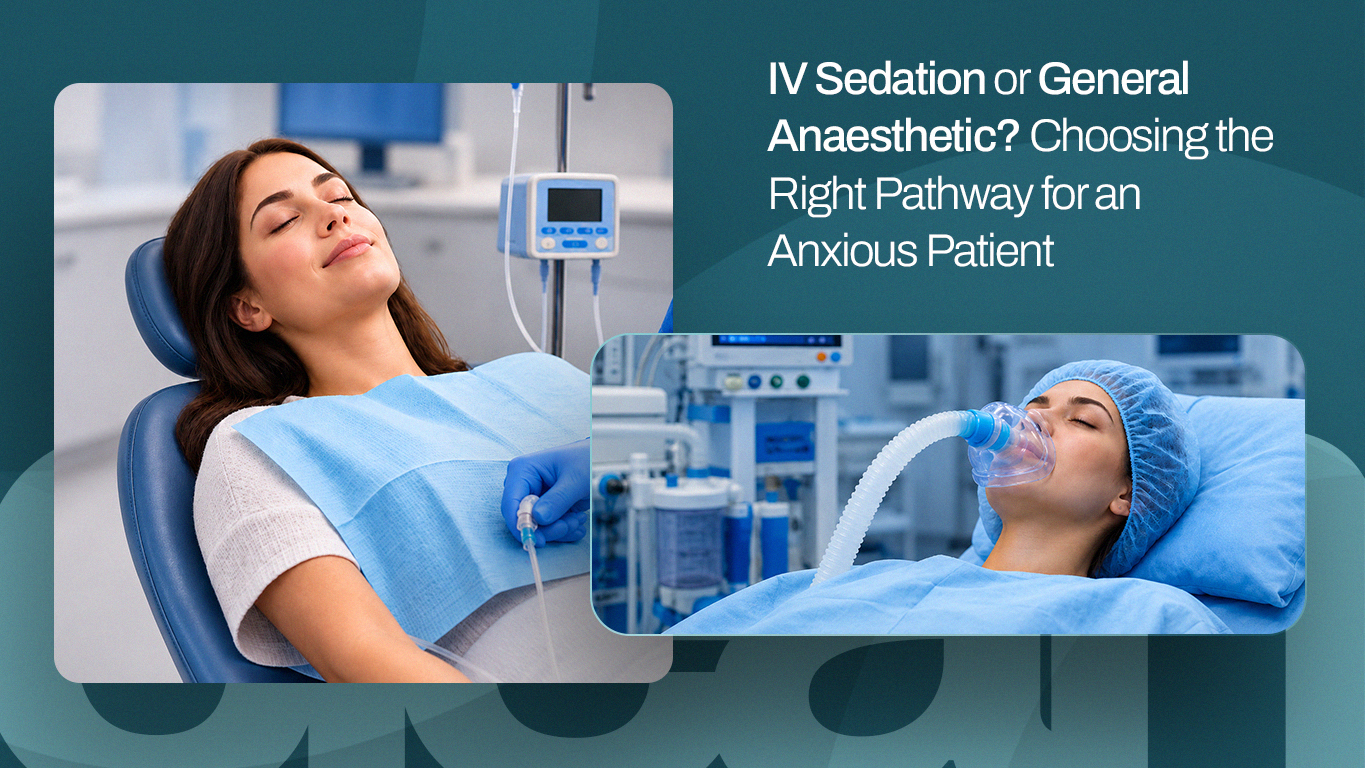
IV sedation is titrated through a cannula and takes the patient to a state where they are drowsy, breathing spontaneously and rousable, with little or no recollection afterwards. Recovery is generally quicker.
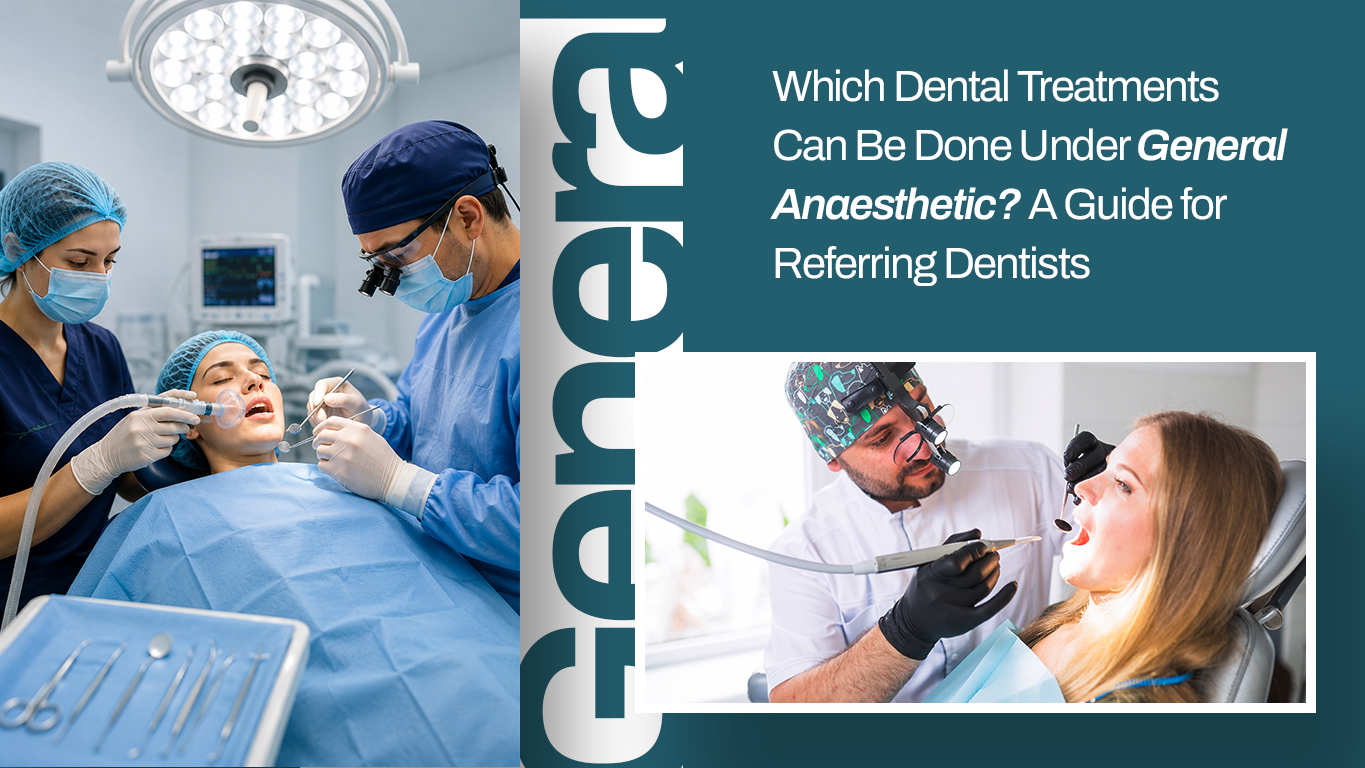
General anaesthesia takes the patient to full unconsciousness with the airway managed by the anaesthetist. It allows longer, more involved procedures and complete immobility, which matters for surgical work and for patients who cannot cooperate at all.
The decision between them is made by the anaesthetist after reviewing the patient’s medical history, not chosen from a menu at booking. What the referring dentist provides is the treatment plan and a realistic estimate of theatre time; the anaesthetic technique follows from that.
When a case should leave your chair
In-chair options are often sufficient for a nervous but cooperative adult having a single restoration. A case is usually better placed in theatre when one or more of these apply:
- Nitrous oxide or oral sedation has already been tried in your practice and did not allow treatment to be completed.
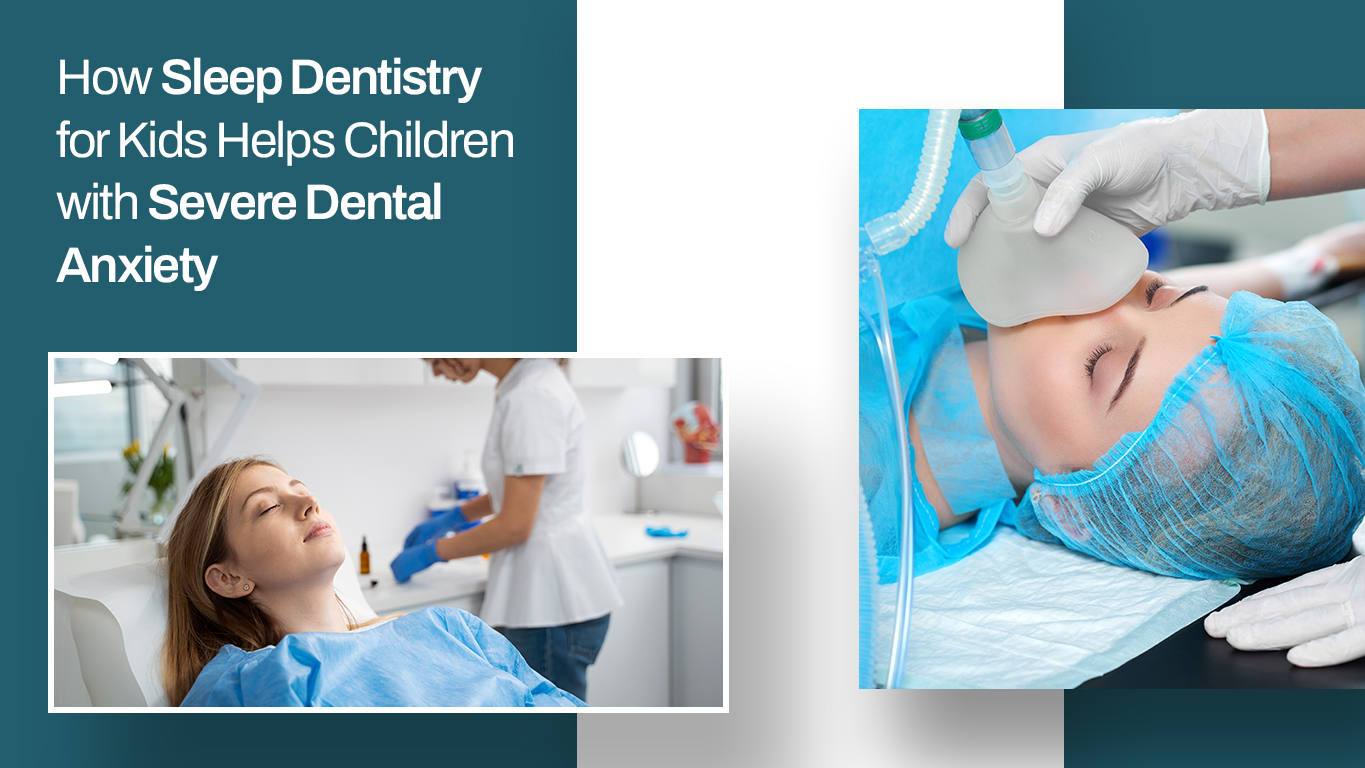
- The patient cannot cooperate at all, through age, intellectual disability, autism, dementia, or a non-verbal presentation.
- The treatment plan is long enough that splitting it across multiple visits risks the patient disengaging entirely.
- The work is surgical, or a pronounced gag reflex makes posterior access impractical.
- The patient has a medical history you would rather have assessed and monitored by an anaesthetist.
The consolidation point is often the deciding one. A plan that would take five appointments the patient will not keep can frequently be completed in a single theatre session.
What the patient pays
A patient treated at the facility receives three separate accounts, and it is worth setting that expectation in your practice before you refer:
- Dental treatment - invoiced by your practice. Not claimable through Medicare.
- Facility fee - invoiced by ASDS, charged hourly against the theatre time booked. Not claimable through Medicare.
- Anaesthetic - invoiced by Sleep Dentistry Services. Partly claimable through Medicare.
Only the anaesthetic attracts a rebate. There is no GST on any component. All three figures are provided to the patient in writing before the day, so nobody is surprised on arrival.
Eligibility
- No minimum age. Patients under four are accepted.
- BMI up to 50.
- Complex medical histories are assessed individually during the SDS pre-operative review.
- Procedures expected to run beyond 5.5 hours are reviewed by the SDS Medical Director before booking.
- Lists run Monday to Saturday, 7 am to 7 pm.
The patient comes back to you
The facility does not offer treatment under its own name and has no in-house dentist. You bring your patient, complete the treatment yourself, invoice your own fee, and resume their care in your practice afterwards. The referral pathway is built to keep the clinical relationship where it started.
Discuss a case
Get in touch, and we send you the referring dentist pack rate card, booking form and the facility hire agreement.
Advanced Sleep Dental Solutions 664 Mountain Hwy, Bayswater VIC 3153 03 9069 3103 · team@advancedsleepdental.com.au advancedsleepdental.com.au